Standing in the Gap
You stand between two worlds.
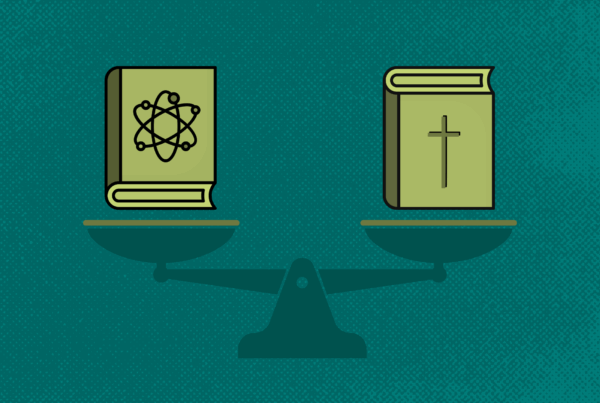
On one side: theology, where students wrestle with Scripture and the character of God.
On the other: science, where biology, neuroscience, and cosmology shape how we see ourselves and the universe.
Your students feel the tension too. Some keep faith and science in separate boxes: Sunday for theology, weekdays for biology. Others come ready for debate, but not integration. And some—the quiet ones—wonder if their faith can survive the microscope or the telescope.
They don’t need a perfect answer. They need a framework. A way to hold Scripture and science in the same hand—with integrity, and with awe.
Why the Divide Persists
Most Christian schools weren’t built for cross-talk. Departments stay siloed. Schedules stay packed. Professors stick to their lanes.Step outside those lanes, and the answers wobble. Science questions get theological replies.
Theology questions get scientific ones.
Meanwhile, students live in a world where these questions are everywhere—TikTok, podcasts, university lectures, daily life. Questions about evolution, embodiment, AI, or climate aren’t electives. They shape how students imagine God and themselves.
If we don’t give them tools in the classroom, they’ll find them elsewhere—YouTube, Reddit, or the loudest cultural voice.
Here’s the opportunity: you can help them build a faith that doesn’t flinch at science, and a science that doesn’t exile the soul.
”They don’t need a perfect answer. They need a framework. A way to hold Scripture and science in the same hand—with integrity, and with awe.
Three Practices for Integration
Faith and science don’t need to compete. They need to be taught within a larger story. Here are three ways to start:
1. Teach Genesis as Ancient Theology, Not Modern Science
Help students read Genesis 1–3 in context: ancient Near Eastern literature, written to reveal meaning, not mechanics. Show them frameworks like John Walton’s The Lost World of Genesis One. Once they grasp this, they can study biology without feeling they’ve betrayed Scripture.
2. Reclaim Science as Worship
Kepler, Faraday, Francis Collins—Christians have long seen research as sacred work.
Studying genetics, ecosystems, or neurobiology is a way of beholding God’s artistry. Say it clearly: discovery itself is doxology.
3. Model Humble Curiosity
You don’t need mastery in every discipline. What students need is your willingness to engage without fear. Bring in guest voices. Use trusted resources like BioLogos.org. Let your classroom become a place where mystery isn’t avoided, but embraced as part of Christian maturity.
Why This Matters
The great questions of our age—about AI, consciousness, gender, suffering, mortality—are not just scientific. They are theological.
And this is where you come in.
When you help students see how theology and biology inform each other, you form leaders who won’t panic in complexity. Pastors who acknowledge DNA and mental health. Scientists who pray. Theologians in awe of the genome.
You’re not only educating minds. You’re shaping a generation to be unafraid of discovery.
In an age of division, that kind of integration is holy work.
Want to Go Deeper?
Read: The Language of God by Francis Collins, The Lost World of Genesis One by John Walton
Explore: ScienceWithFaith.com — tools and curricula for educators, BioLogos.org — classroom resources and discussion guides
Subscribe: Wonderology + free after-show Science With Faith