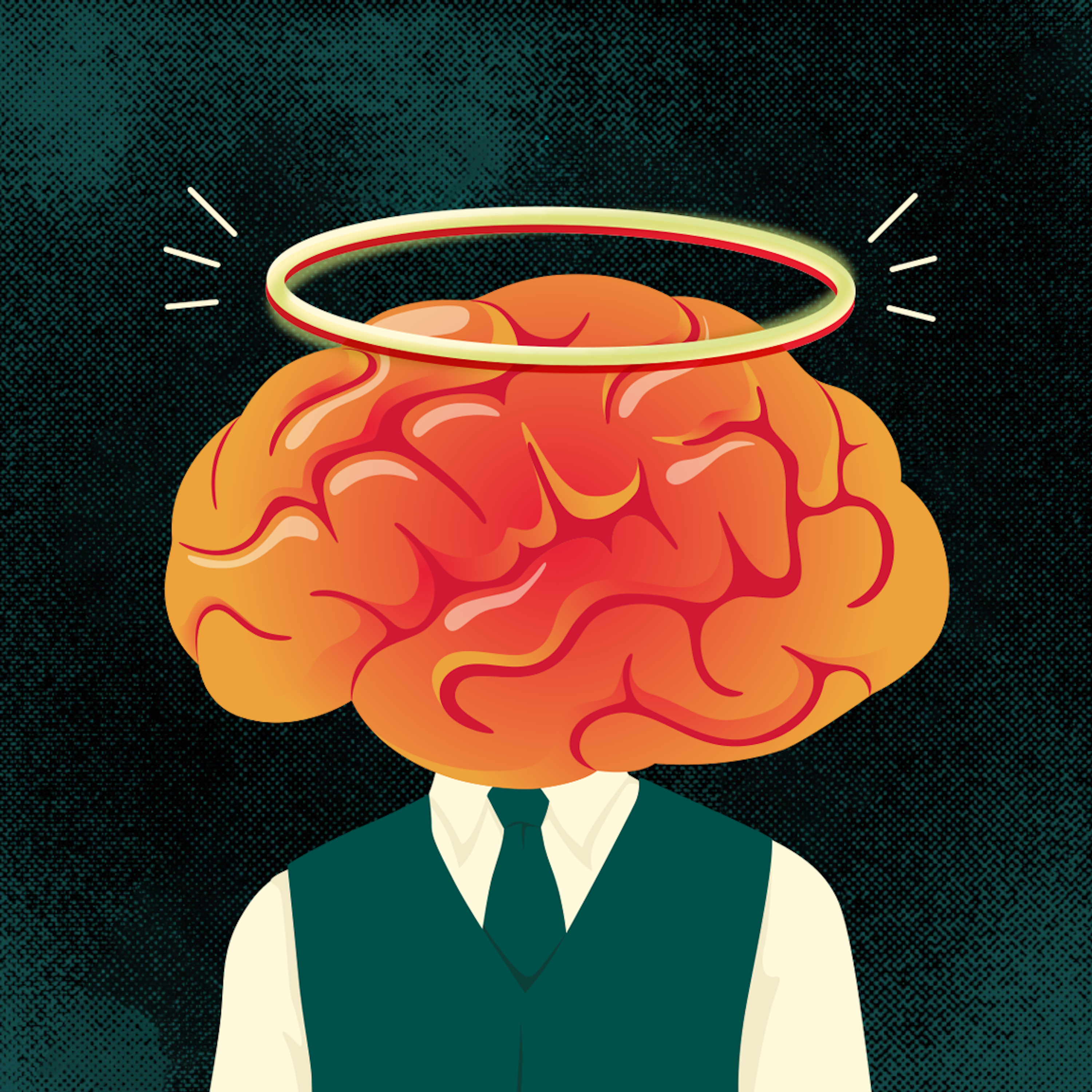
A stroke takes away someone’s speech. She forgets her favorite song. Her personality shifts. A scan reveals the damage. And it raises the question: Who is the real me? Is it just my brain?
But then you open a psalm and read: “Bless the Lord, O my soul.” You hear Jesus say, “What good is it to gain the whole world and lose your soul?” And you wonder: no, maybe my soul is me.
So which is the real me? My brain or my soul?
Why the Question Matters
Neuroscience shows how moods and memories light up brain regions. Cut off oxygen, and a person seems to vanish. It’s enough to make you believe that everything you are—your laughter, your choices, even your prayers—is simply the sum of electrical signals in your brain. This view can’t fully answer the deeper question: Who is the real me?
But faith traditions talk about the soul—the part of you that endures, the “real you” that outlives the body. That’s what people mean at funerals: “Her soul is in a better place.” Beneath the grief is a stubborn conviction that a human being cannot be reduced to chemistry or circuitry.
Both stories carry truth. Both leave something out. One makes us sound like biological gadgets. The other makes us sound like immaterial ghosts. And when neither story fits, we find ourselves caught in the tension, looking for a way to hold both science and Scripture without losing either.
”One makes us sound like biological gadgets. The other makes us sound like immaterial ghosts.
What the Bible Actually Says
In Hebrew, the word for soul is nephesh. Not ghost. Not vapor. Nephesh means living being. It shows up hundreds of times in the Old Testament, usually pointing to the whole person. “My nephesh thirsts” doesn’t mean some hidden part is dry. It means I am thirsty.
The imagery of Genesis 2 is a key scene. God shapes dust from the ground. He breathes into it. The dust doesn’t receive a ghostly soul. The dust becomes a living being—a nephesh. A living person. Even animals are called nephesh. Soul, in Hebrew thought, is not detachable. It’s all of you—Your personality, passions, body, memories and spirit.
The New Testament carries the same vision. The Greek word psyche often gets translated “soul,” but it means “life” or “self.” When Jesus warns, “What good is it to gain the world and lose your psyche?” he isn’t picturing a ghost flying away. He’s saying your whole embodied life can be squandered.
Paul presses this further. Christian hope isn’t escape but resurrection. In 1 Corinthians 15 he contrasts a “natural body” with a “spiritual body.” Not material versus immaterial. The natural body runs on breath. The spiritual body runs on God’s Spirit. Look at Jesus after Easter: scars visible, fish on the fire, yet life transfigured. That’s Paul’s vision. N. T. Wright calls this ‘transphysical,’ a body made new but still embodied.
So the soul isn’t cargo inside your skin. The soul is you. Body and brain. Breath and memory. Loves and choices. That’s why the psalmist tells his soul to bless the Lord—he’s summoning his whole self. And that’s why resurrection is the Bible’s great hope: God renewing the whole person, dust and Spirit together, more alive than we’ve ever known.
How We Got the Ghost Idea
So why do we picture the soul as a glowing, detachable “real me”?
Part of the answer is philosophy. Plato called the body a prison and the soul an immortal essence. Augustine borrowed some of that language which was later misinterpreted. Descartes sharpened it into “the ghost in the machine.” Over centuries, hymns, sermons, and funeral clichés spread the picture until it felt biblical.
But here’s the twist: Christians also misread Paul. His contrast between “flesh” and “spirit” was never about body versus soul. Flesh meant life bent inward on itself. Spirit meant life opened up to God. But when those words got flattened into “body bad, soul good”, the ghost idea hardened. Suddenly the Bible itself sounded like it was teaching a dualism it never intended.
Put those streams together—Greek philosophy from outside, misread Scripture from inside—and you get the modern Western default: you are a ghost who happens to drive a body. Science pushed back with equal force: forget the ghost, you’re just a brain. And that’s how we got stuck with two thin options.
Who Is The Real You?
The Bible never forced a choice between brain and soul. It tells a bigger story.
Your soul is all of you.
So is your brain you? Yes. Is your soul you? Yes. But neither stands alone. You are an embodied soul. Dust alive with breath. Neurons alive with meaning. A person alive with God.
That is why Christian hope is not escape but resurrection: not losing the body or the brain, but having them raised, healed, and made whole. The same you, more alive than ever.
STILL CURIOUS? LISTEN NOW!
When a neuroscientist’s mother suffers a stroke, something essential seems to slip away. If an injury to the brain can alter our memories, our personality, even our beliefs—we have to wonder: Is my brain me?