After the Fire
You’re not furious anymore. Not like when the old framework cracked and everything spilled out.
Back then, every podcast, every late-night debate felt like fresh proof the whole thing deserved to burn.
And maybe, for a time, you needed that — to admit your doubts, to walk away from the flimsy faith handed down through youth group clichés and Instagram theology.
So you tore it down. You asked the hard questions. You refused the cheap answers.
But now you find yourself here — building a career, making a life. The anger cooled, but the hunger stayed. You still want truth. You still ache for meaning.
The real question is: if you’ve deconstructed, what will you construct?
Why Deconstruction Isn’t Enough
For many, the breaking point came through betrayal: a leader fell, a prayer went unanswered, a theology collapsed under lived experience.
For others, it came through science — an encounter with evolution, cosmology, or neuroscience that made old categories feel too small.
That disruption wasn’t failure — it was growth. Your questions widened. Your world expanded.
But skepticism alone won’t sustain you. Skepticism is a stage, not a destination. Tear down forever, and you’re left with rubble.
Deconstruction clears space. But you can’t live in a demolition site.
”Skepticism alone won’t sustain you. Skepticism is a stage, not a destination. Tear down forever, and you’re left with rubble.
Science Alone Won’t Satisfy
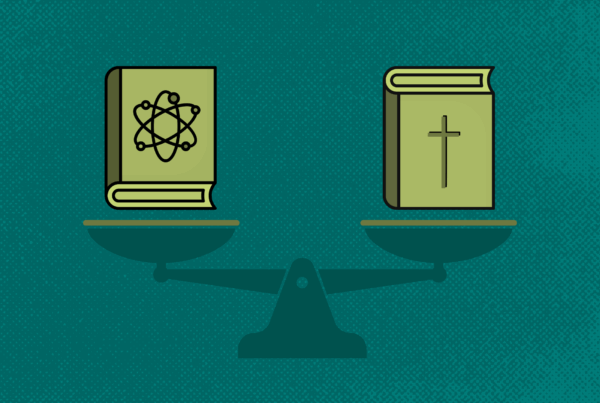
It’s tempting to trade one certainty for another — that science alone explains reality.
But science, astonishing as it is, was never meant to answer everything.
It can show how neurons fire, but not why memory feels sacred. It can chart the birth of stars, but not why their light leaves you breathless. It can measure the chemicals of love, but not explain why love feels holy. This is why many brilliant scientists find themselves drawn not away from faith, but deeper into it:
-
Ard Louis — Oxford physicist, studies quantum complexity, and is a Christian.
-
Jennifer Wiseman — astrophysicist, maps star formation, directs science dialogue at AAAS, and speaks openly of her faith.
-
Scott Acton — led the mirror alignment for the James Webb Space Telescope, saying that looking at the universe deepened his faith.
They didn’t stop following evidence. They followed it all the way to awe.
A Faith That Holds Together
If you’re still reading, you already care. You’re not looking for the shallow faith that told you depression was sin or that dinosaurs never existed. You’re looking for something truer.
And it exists. A faith that:
-
Understands evolution yet proclaims humanity made in God’s image
-
Welcomes therapists and scientists alongside preachers
-
Reads peer-reviewed journals alongside the Psalms
-
Walks with Jesus — not because doubt never came, but because he stayed when it did
This kind of faith isn’t naïve. It takes time, humility, and community. But it’s possible.
And often, it begins with wonder.
Wonder softens cynicism. Wonder reminds us the world is not just data, but gift — that beauty and mystery still matter, that worship might still belong in a life sharpened by doubt.
You don’t need to rebuild the house you left. But you do need to build something. Maybe science wasn’t your off-ramp from faith. Maybe it was your doorway into a deeper one.
Want to Go Deeper?
Read: The Jesus I Never Knew — Philip Yancey, The Reason for God — Timothy Keller
Explore: BioLogos.org — resources for life after doubt
Subscribe: Wonderology + free mini-series Everything From Nothing